
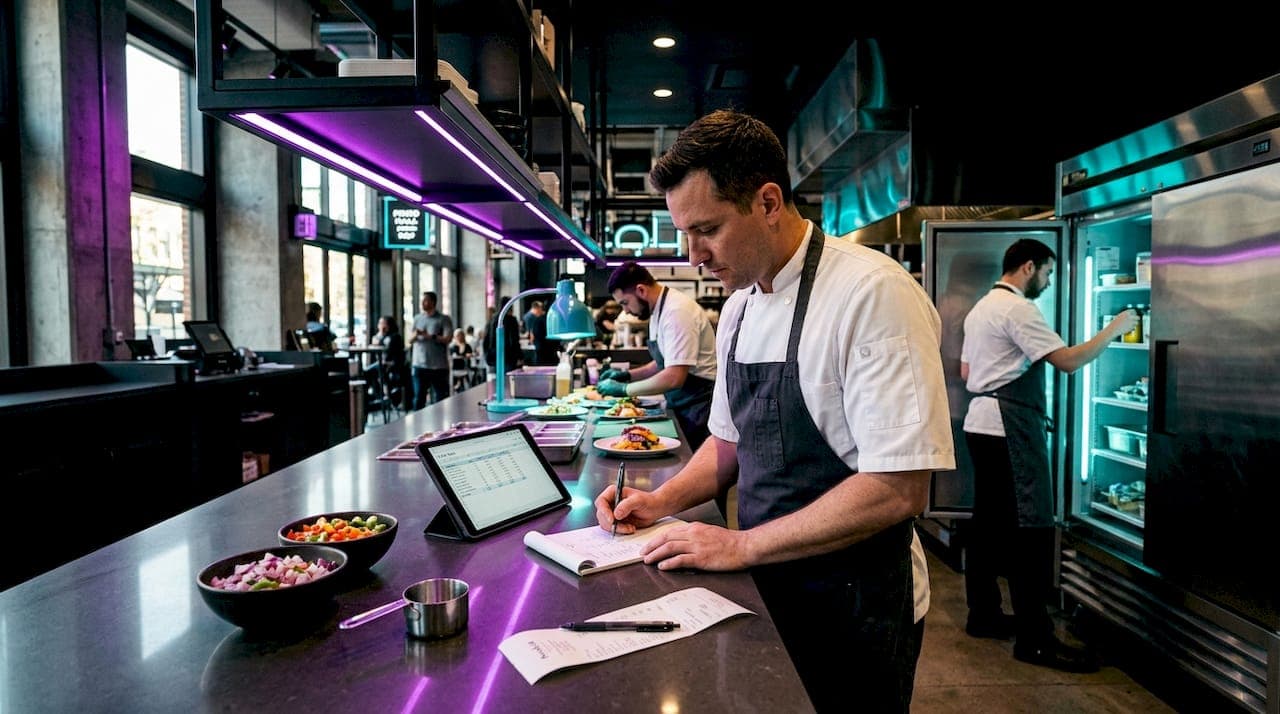
Most food entrepreneurs and home cooks treat food costs as something to check once a month, if at all. That's exactly why so many culinary ventures quietly bleed money. Understanding what is daily food cost target gives you a real-time lens on whether your purchasing, portioning, and pricing are actually working. This guide breaks down the definition, how to calculate it, what benchmarks actually mean, and how to use this number to make smarter decisions every single day, whether you're running a food truck or cooking for your household.
Table of Contents
- Key takeaways
- What is daily food cost target, exactly
- Real-world benchmarks for daily food costs
- How to calculate your daily food cost target
- Factors that shift your daily food cost target
- Practical strategies to stay within your target
- My take on daily food cost targets
- Calculate your food costs with Cookx
- FAQ
Key takeaways
| Point | Details |
|---|---|
| Daily food cost target defined | It's the dollar amount or percentage of sales you aim to spend on ingredients each day. |
| Industry percentage benchmarks | Most food businesses target 28%–35% of revenue for ingredient costs. |
| Home cook benchmarks exist | The USDA moderate food plan translates to roughly $10.90–$12.93 per adult per day. |
| Tracking frequency matters | Weekly or daily tracking catches margin erosion before it compounds into a real problem. |
| Targets must fit your concept | Quick-service, fine dining, catering, and home cooking each require different target ranges. |
What is daily food cost target, exactly
The food cost target definition sounds simple: it's the maximum you plan to spend on food ingredients to stay profitable or within budget. In practice, it works two ways depending on your context.
For food entrepreneurs, the daily food cost target is almost always expressed as a percentage of revenue. If your food truck brings in $800 on a Tuesday and your target is 30%, you should spend no more than $240 on ingredients that day. This approach scales with your sales volume, which makes it far more useful than a fixed dollar figure that ignores how busy you actually were.
For home cooks, the target is typically a daily dollar amount tied to a household food budget. You set a monthly grocery budget, divide by 30, and that becomes your daily food expense ceiling.
Here's where most people get confused. These two approaches measure different things:
- Percentage targets tie ingredient spending directly to revenue, making them ideal for pricing and profitability decisions in food businesses.
- Dollar targets set absolute spending limits, which work well for household budgeting but can mislead food entrepreneurs who have variable revenue days.
Pro Tip: If you run a food business, always track food cost as a percentage of sales, not just a dollar amount. A $300 ingredient spend looks fine on a $1,000 revenue day but is a disaster on a $600 day.
The food cost percentage is calculated as (Cost of Ingredients ÷ Menu Price) × 100. This single formula is the backbone of every serious food cost planning conversation. Restaurant food cost targets typically fall between 28% and 35% of revenue, though fine dining can push closer to 38% due to premium ingredients.
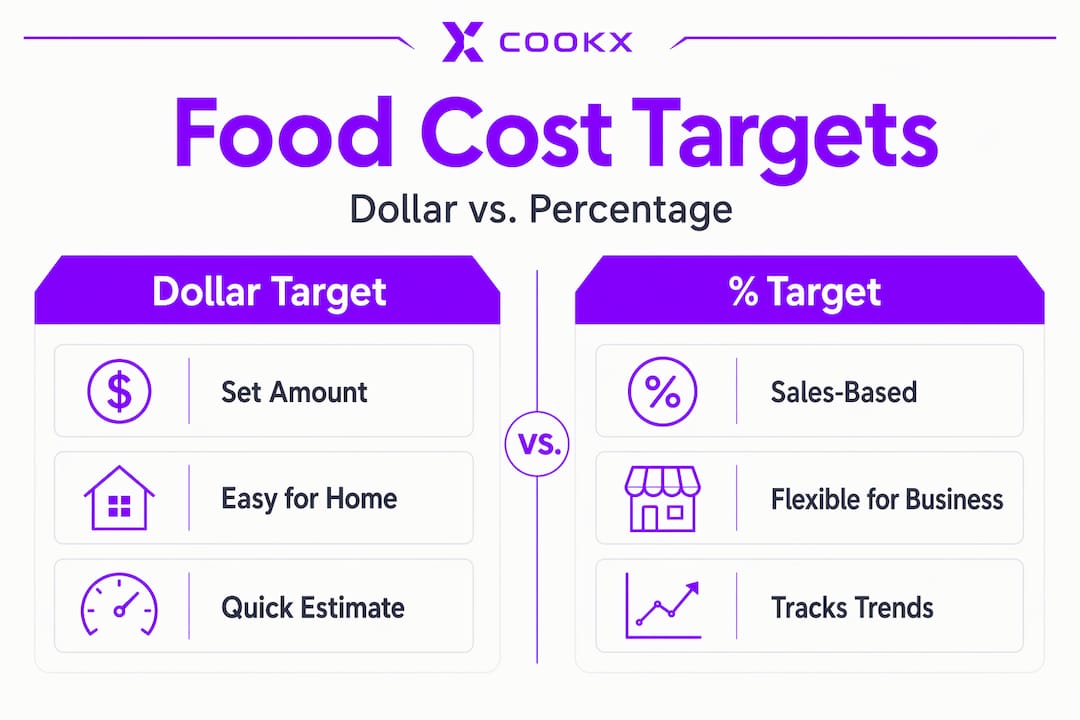
Dollar target vs. percentage target: a quick comparison
| Context | Target Type | Example | Best Used For |
|---|---|---|---|
| Home cooking | Daily dollar amount | $12 per adult per day | Household grocery budgeting |
| Food truck / café | Percentage of daily sales | 30% of revenue | Pricing and profitability |
| Catering | Percentage per event | 28%–32% of contract value | Event cost control |
| Fine dining | Percentage of revenue | 32%–38% of revenue | Premium menu pricing |
Real-world benchmarks for daily food costs
Knowing what others spend gives you a starting point, but benchmarks only help if you understand what they include and what they leave out.
For home cooks in the U.S., the USDA moderate food plan puts a single adult's daily grocery cost at roughly $10.90 to $12.93 in 2026. That figure covers groceries only. It does not include dining out, delivery fees, or the labor of cooking. If you're budgeting for a household, dividing your monthly plan by the number of days gives you a practical daily food budget to work from.
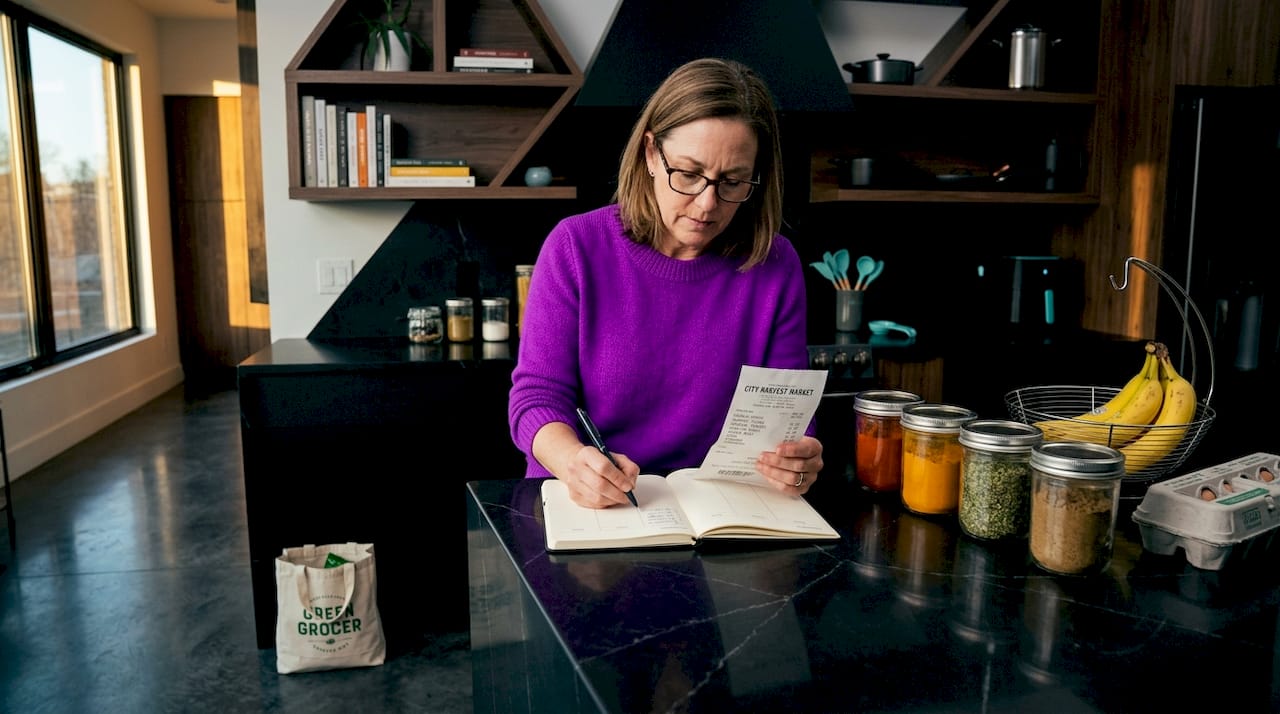
The USDA also offers four spending tiers: thrifty, low-cost, moderate, and liberal. Your daily food cost target should align with your actual goals, not just the cheapest option. A home baker who sources quality butter and specialty flour will naturally run higher than the thrifty benchmark, and that's completely fine as long as the pricing reflects it.
For food entrepreneurs, the benchmarks shift entirely. Here's how typical daily food cost targets break down by business type:
- Quick-service and fast-casual: Target food cost percentage in the high 20s to low 30s, typically 27%–32%.
- Full-service restaurants: Generally aim for 30%–35%, with more complex menus and higher ingredient quality.
- Fine dining: Can reach 32%–38% because premium proteins and specialty ingredients are part of the brand promise.
- Catering operations: Often target 28%–32% per event, though this varies significantly based on menu complexity and client budget.
Internationally, benchmarks look very different. Nigeria's Cost of a Healthy Diet per adult per day was N1,513 in February 2026, a figure that rose 12.4% year-on-year. This number represents a nutritional floor, the bare minimum to eat healthily. It excludes meal preparation, transportation, and any business overhead. Food entrepreneurs operating in markets like this must treat these figures as a cost floor, not a pricing target. Pricing must also cover labor, packaging, food safety, and waste.
How to calculate your daily food cost target
Getting this number right is not complicated, but it does require consistency. Here's a step-by-step process you can apply whether you're running a home kitchen or a commercial operation.
-
List all ingredients used in a day. Include every item that goes into your recipes, from cooking oil to garnishes. Partial use of an ingredient still counts as a cost.
-
Calculate the cost of each ingredient used. If a recipe uses 200g of chicken and you paid $8 per kilogram, that's $1.60 for that ingredient in that dish.
-
Add up total ingredient costs for the day. This is your actual daily food spend.
-
Divide by total daily revenue (for businesses). Multiply by 100 to get your food cost percentage. If you spent $280 on ingredients and made $900 in sales, your food cost percentage is 31.1%.
-
Compare against your target. If your target is 30% and you're running at 31.1%, you're slightly over. That's a signal to review portion sizes, purchasing prices, or menu pricing.
-
Repeat daily or at minimum weekly. Tracking food cost percentage regularly helps catch small inefficiencies before they compound into serious margin problems.
Pro Tip: Build a simple spreadsheet that auto-calculates your food cost percentage each day. Even a basic version saves hours of mental math and makes trends visible at a glance.
One pitfall to avoid: many food entrepreneurs only calculate food costs when something feels wrong. By then, cost drift from supplier price increases and portion changes has already eroded weeks of profit. Proactive, frequent tracking is what separates businesses that scale from those that stall.
Factors that shift your daily food cost target
Your target is not a fixed number you set once and forget. Several forces push it up or down, and understanding them helps you set realistic expectations from the start.
Business model and concept: A quick-service concept with a tight, repeatable menu can maintain tighter food cost percentages than a fine dining restaurant with daily specials and imported ingredients. Your target must reflect the reality of what you're serving, not an industry average you found online.
Ingredient quality and sourcing: Sourcing organic, local, or specialty ingredients raises your cost floor. If your brand promise is built on premium quality, a higher food cost percentage is a feature, not a flaw. The key is that your menu prices must reflect it.
Portion drift: This is one of the sneakiest cost killers in any kitchen. Portion drift happens when cooks gradually serve slightly more than the recipe specifies, a little extra sauce here, a larger protein portion there. Over weeks, this quietly inflates your food cost percentage without any single obvious cause.
Menu mix changes: Introducing a new high-cost item that becomes a bestseller can shift your average food cost percentage significantly. Always recalculate your target when you add or remove menu items.
Seasonal price fluctuations: Ingredient prices move constantly. A food cost target that worked in January may be impossible to hit in July when produce prices spike. Build in a review cycle tied to seasonal changes, not just annual planning.
Practical strategies to stay within your target
Knowing your target is one thing. Hitting it consistently requires a few deliberate habits.
-
Negotiate with suppliers regularly. Prices are rarely fixed. Reviewing supplier contracts quarterly and comparing quotes can reduce your ingredient costs without changing your menu.
-
Use standardized recipes. Every dish should have a written recipe with exact weights and measurements. This removes guesswork from portioning and makes your food cost calculations accurate.
-
Apply the first-in, first-out (FIFO) method. Using older inventory before newer stock reduces spoilage, which is a direct drain on your daily food budget.
-
Calculate cost before adding new menu items. Before a dish goes on the menu, run the numbers. Use a recipe cost calculator to confirm the item fits within your target food cost percentage at a price your customers will actually pay.
-
Review your target when costs change. If a key ingredient rises 15% in price, your old target may no longer be achievable without a price adjustment. Adjust proactively rather than absorbing the hit silently.
-
Track waste separately. Waste is a cost that never generates revenue. Logging it separately from ingredient usage shows you exactly how much money is leaving through the trash, and where to fix it.
Pro Tip: When ingredient prices spike, resist the urge to immediately cut portion sizes. Instead, look at your menu mix first. Shifting customer attention toward higher-margin items often recovers more profit than shrinking portions.
My take on daily food cost targets
I've worked with enough food entrepreneurs to know that the ones who obsess over hitting an exact percentage every single day often end up making worse decisions than those who track trends over time. A 33% food cost day is not a crisis. A consistent upward trend from 30% to 33% over six weeks absolutely is.
What I've found is that rigid targets create a false sense of control. You hit 29% on Monday and feel great, then ignore the fact that you ran out of a key ingredient and had to 86 three dishes. The real story is in the pattern, not the daily number.
The most useful thing I've seen food entrepreneurs do is set a target range, not a single number. Something like 28%–32% gives you room to operate while still flagging when costs are genuinely out of control. Home cooks benefit from the same thinking. A daily food budget of $12 per person is a guide, not a law. Some days you spend $8, some days $16. What matters is whether the weekly average lands where you need it.
The other thing worth saying plainly: no benchmark from the USDA or any industry report knows your kitchen, your suppliers, or your customers. Use those numbers as a starting point, then build a target that reflects your actual operation. That's where the real work happens.
— Jayy
Calculate your food costs with Cookx
If manually tracking ingredient costs and recalculating percentages every day sounds exhausting, that's because it is without the right tools. Cookx applies culinary school-level food cost mathematics to your actual recipes, ingredient prices, and yields in real time. Whether you're a home baker pricing custom cakes, a food truck operator managing daily ingredient budgets, or a caterer building event quotes, the Cookx recipe calculators do the math so you can focus on cooking. No monthly subscription required. You pay only for what you use, making it practical for operations of any size. Start calculating your daily food cost target accurately today.
FAQ
What is a daily food cost target?
A daily food cost target is the maximum dollar amount or percentage of revenue you plan to spend on ingredients each day to stay within budget or maintain profitability. Food businesses typically express it as a percentage of daily sales, while home cooks use a fixed dollar amount.
What percentage should food cost be daily?
Most food businesses target a food cost percentage between 28% and 35% of daily revenue, though fine dining can run closer to 38%. Quick-service operations typically aim for the lower end of that range.
How do I calculate my daily food cost?
Add up all ingredient costs used in a day, then divide by your total daily revenue and multiply by 100. For example, $280 in ingredients divided by $900 in sales equals a 31.1% food cost percentage.
What is a good daily food budget for home cooks?
The USDA moderate food plan puts a comfortable daily grocery budget at roughly $10.90 to $12.93 per adult in 2026 for meals prepared at home. Your personal target should reflect your dietary goals and ingredient choices.
Why does my food cost percentage keep creeping up?
Food cost percentages rise from supplier price increases, portion drift, menu mix changes, and untracked waste. Weekly tracking is the most reliable way to catch these shifts early before they compound into significant profit loss.